
Social Group Programs
- Home
- »
- Social Group Programs
Male Shared Interest Video Gaming Group
The Weekly Video Game Group is a small, structured, support-worker-led activity group for adults who enjoy video games and prefer predictable, low-pressure environments.
Male Shared Interest Video Gaming Group
Group 2 - 18+ Wednesday 7pm-9pm
The Weekly Video Game Group is a small, structured, support-worker-led activity group for adults who enjoy video games and prefer predictable, low-pressure environments.
The group provides an opportunity for shared participation, routine, and social connection through video games, without therapeutic intervention or clinical focus.
The group runs weekly with the same participants, at the same time and location, to support consistency and familiarity.
Payment - NDIS and private pay options available
Day Connection
Weekly youth group program designed to provide a safe, predictable, and engaging environment where participants can build social connection, confidence, independence, and community participation skills.
Day Connection
Group 2 – Thursday 10:30am – 2:30pm
Day Connections is a weekly youth group program designed to provide a safe, predictable, and engaging environment where participants can build social connection, confidence, independence, and community participation skills.
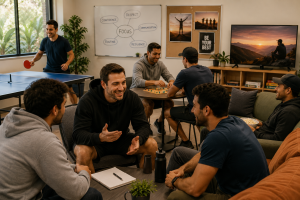
The program offers a stable weekly routine (same day/time), while allowing participants freedom to choose activities based on interests and energy levels. Participants can participate in onsite activities such as gaming, board games, gym/movement, art, and 8-ball, or join optional community-based activities such as nature walks, outdoor sports, and local excursions.
This program is ideal for young people who benefit from routine, low-pressure social connection, and structured support—without being forced into activities they don’t enjoy.
This program is funded through NDIS Core Supports under: Assistance with Social & Community Participation (group-based supports)
Strong Foundation Program
Program for boys who are homeschooled, disengaged from school, or experiencing school refusal—providing a safe, consistent space to build routine, confidence, positive male development, and social connection.
Strong Foundation Program
Ages 13-18
Strong Foundations is a structured weekly group program designed for boys that are homeschooling, who disengage with school or are home due to school refusal, and who require safe, consistent opportunities for routine, confidence building, positive male development and social connection.
The program provides a calm and predictableenvironment where participants engage in movement, guided wellbeing education, and supported social participation.
This program is support-worker led and is not therapy, counselling, or a clinical intervention. It is designed to support young males to develop confidence, resilience, positive routines and pro-social connection through structured participation.
The program is facilitated by Josh (Social Worker / Teacher) with additional support workers present to ensure safety, regulation, and a respectful group culture.
Payment - NDIS and private pay options available.
Session Format (Consistent Weekly Routine):
1. Arrival & Orientation (10 minutes)
2. Strength & Mobility (45 minutes) Support-worker-led movement session focused on stretching, mobility and beginner strength participation (e.g., bodyweight exercises, resistance bands, light weights).
Delivered in a calm, supportive manner with no competitive or bootcamp culture. Participation is flexible and supported.
3. Reset Break (10 minutes)
Short structured break for hydration/snack and regulation.
4. Male Wellbeing Education (45 minutes)
Guided psychoeducation and discussion (not therapy) on practical topics relevant to young males, such as: coping strategies, emotional regulation, handling frustration, stress and social pressure, bullying, confidence and self-respect, healthy identity and male development, boundaries, respectful behaviour and communication.
Participation in discussion is voluntary; listening is valid participation.
5. Supported Social Time (30 minutes)
Structured social participation supported by staff through choice-based activities such as video games, board games, art / hands-on activities.
Staff support inclusion, safety, turn-taking and respectful interaction.
6. Close Routine (5 minutes)
Predictable close routine, transitions supported, reminder of next session.
Men's Youth Group
Weekly social group for young men who want connection, mateship, and community without the pressure or overwhelm that can come with pubs, loud venues, or large mixed groups.
Men's Youth Group
Ages 18-30
Men’s youth group is a weekly social group for young men who want connection, mateship, and community without the pressure or overwhelm that can come with pubs, loud venues, or large mixed groups.
The group runs at the same time every Friday night, creating predictability and routine, while allowing participants freedom of choice in activities. Options include video games, board games, 8-ball, sport viewing during footy season, movie nights, and relaxed hang-out time.
This group is ideal for young men who may experience social isolation, low confidence, anxiety in social settings, or difficulty forming friendships. Staff actively support inclusion, positive group culture, and respectful behaviour, while allowing each person to participate at their own pace.
Payment - NDIS and private pay options available
Creative Connections
The group provides space for free drawing, creative expression, and art-based activities, with the option for gentle support and skill- building for those who want to learn new techniques.
Creative Connections
Ages 15-19
Creative Connections is a calm, supportive weekly group where participants can explore creativity in a safe and welcoming environment.
The group provides space for free drawing, creative expression, and art-based activities, with the option for gentle support and skill- building for those who want to learn new techniques.
Participants can choose how they engage:
• create independently in a quiet space
• work alongside others for motivation and connection
• receive support with planning, art techniques, and confidence-building
There is no pressure to socialise or “produce” anything specific. The program is designed to be low-stimulation and choice-based, allowing participants to regulate and participate in a way that feels safe for them.
Payment - NDIS and private pay options available
Weekly TableTop Games
The Weekly Tabletop & Board Game Group is a small, support worker–led group for adults who enjoy board and tabletop role-playing games, offering routine and social connection in a calm, non-clinical setting.
Weekly TableTop Games
The Weekly Tabletop & Board Game Group is a small, structured, support-worker-led activity group for adults who enjoy board games and tabletop role-playing games.
The group provides opportunities for shared participation, routine, and social connection through structured game play in a calm, non-clinical environment.
The group runs weekly with the same participants, at the same time and location, to support predictability and ongoing engagement.
The group is not a therapy program and does not involve clinical or emotional intervention. Potentially a projector for DnD gaming in the near future.
Payment - NDIS and private pay options available
Public Transport & Real-World Navigation
Participants learn practical skills such as reading bus/train timetables, planning routes using Google Maps, managing time, asking for help safely, and developing backup plans if travel does not go as expected.
Public Transport & Real-World Navigation
The Public Transport & Real-World Navigation Program is a structured 6-week program designed to build participant confidence and independence in using public transport and navigating the community safely.
This program combines planning skills (maps, timetables, routines) with real-world travel practice. Participants progressively build skills through supported trips and practice scenarios, learning how to problem-solve unexpected changes and reduce anxiety while travelling.
Participants learn practical skills such as reading bus/train timetables, planning routes using Google Maps, managing time, asking for help safely, and developing backup plans if travel does not go as expected.
This program is ideal for participants who want to:
• increase independence and reduce reliance on others
• feel more confident leaving the house
• access education, employment, or community activities
• manage anxiety in unfamiliar environments
Supported Gym Session (1:1/EOI)
A flexible support service that helps participants use gym equipment safely in a motivating, supportive space — without the pressure, high cost, or social stress of public gyms.
Supported Gym Session (1:1/EOI)
These sessions are not personal training. Instead, a support worker attends with you to:
• provide encouragement and motivation
• help build routine and consistency
• support safe, respectful use of equipment
• keep you company and help reduce anxiety
• assist with planning a simple gym routine based on your goals and comfort
Participants can attend 1:1, or register interest to join a small group session if there is enough demand and suitable group fit.
Optional pick-up and drop-off support is available to make sessions accessible and reduce barriers to participation.
Community Walk & Coffee Catch Up
This is ideal for people who would like to get out of the house, meet others, and build confidence in community settings, without the pressure of forced conversation or structured “activities”.
Community Walk & Coffee Catch Up
These sessions are not personal training. Instead, a support worker attends with you to:
• provide encouragement and motivation
• help build routine and consistency
• support safe, respectful use of equipment
• keep you company and help reduce anxiety
• assist with planning a simple gym routine based on your goals and comfort
Participants can attend 1:1, or register interest to join a small group session if there is enough demand and suitable group fit.
Optional pick-up and drop-off support is available to make sessions accessible and reduce barriers to participation.